

Cool Solutions, Hot Market


With our warming planet, we will need cooling solutions more than ever. I recently went on Hajj, and while it was the spiritual experience of a lifetime, and I'm very proud of my government for organizing it, the brutal effect of high temperatures was undeniable. This isn’t just an issue at Hajj—it's happening everywhere. Even Olympic athletes had to suffer through extreme heat this year. 2024 is on track to be the hottest year on record, with temperatures continuing to break historical norms worldwide.
While much attention is given to wildfires and other dramatic climate events, the deadly consequences of extreme heat often go underreported. The impacts of rising temperatures on health and economic productivity are already being felt, with heatwaves becoming more frequent and severe.
The health risks are significant, especially for vulnerable populations. Heat-related illnesses range from heat cramps and heat exhaustion to the more severe heat stroke and hyperthermia. Heat-related deaths for adults over 65 have increased by 85% since the 1990s. Children are also at higher risk because their bodies adjust more slowly to changes in environmental temperature. For outdoor workers, researchers found that they face up to 35 times the risk of dying from heat exposure compared to the average person. As temperatures continue to rise, these health risks will only become more severe and widespread. And policy measures are accelerating to tackle it.
On the economic front, the impacts are equally alarming. Extreme heat directly affects productivity, particularly in sectors like agriculture and construction. As temperatures climb, workers slow down, take more breaks, or are unable to work at all, leading to significant losses in labor hours. For instance, when temperatures hit 40°C, productivity can drop by as much as 76% throughout the workday. This loss of productivity is not just theoretical—it’s already happening. In the U.S. alone, extreme heat led to the loss of over 2.5 billion labor hours in 2021, costing the economy about $100 billion. This figure is projected to rise to $500 billion annually by 2050. Globally, the agriculture and construction sectors, which are particularly vulnerable to heat stress, are expected to account for 60% and 19% of these lost working hours, respectively.
While we will always need air conditioning for certain situations, it shouldn't be the default response to increased warming. A more efficient and sustainable approach is to cool people directly rather than cooling entire spaces. It’s far more effective to focus on personal cooling, especially for outdoor workers who are already losing productivity due to the heat. Traditional air conditioning is energy-intensive, with cooling accounting for nearly 7% of global electricity consumption. Today, there are around 2 billion air conditioning units in the world. The International Energy Agency (IEA) projects that this could almost triple to over 5.5 billion by 2050. While we should continue finding new ways to decarbonize space cooling, we should also look at better alternatives that better address the hot mess we are in today.
This is an area that has been explored in military applications and sports, but we have yet to see a transformative technology that can scale massively. The personal cooling solutions we’ve seen so far are either too expensive, require constant access to power, or are simply ineffective. For instance, active cooling vests that use phase change materials or circulating water systems can cost over $1,000 and need regular recharging or freezing, which isn’t feasible for many users. Portable air conditioners are bulky, consume a lot of energy, and are impractical for outdoor use. Misting devices provide temporary relief but do not lower core body temperature, which is critical in preventing heat-related illnesses. Below is a visual of what these solutions look like.
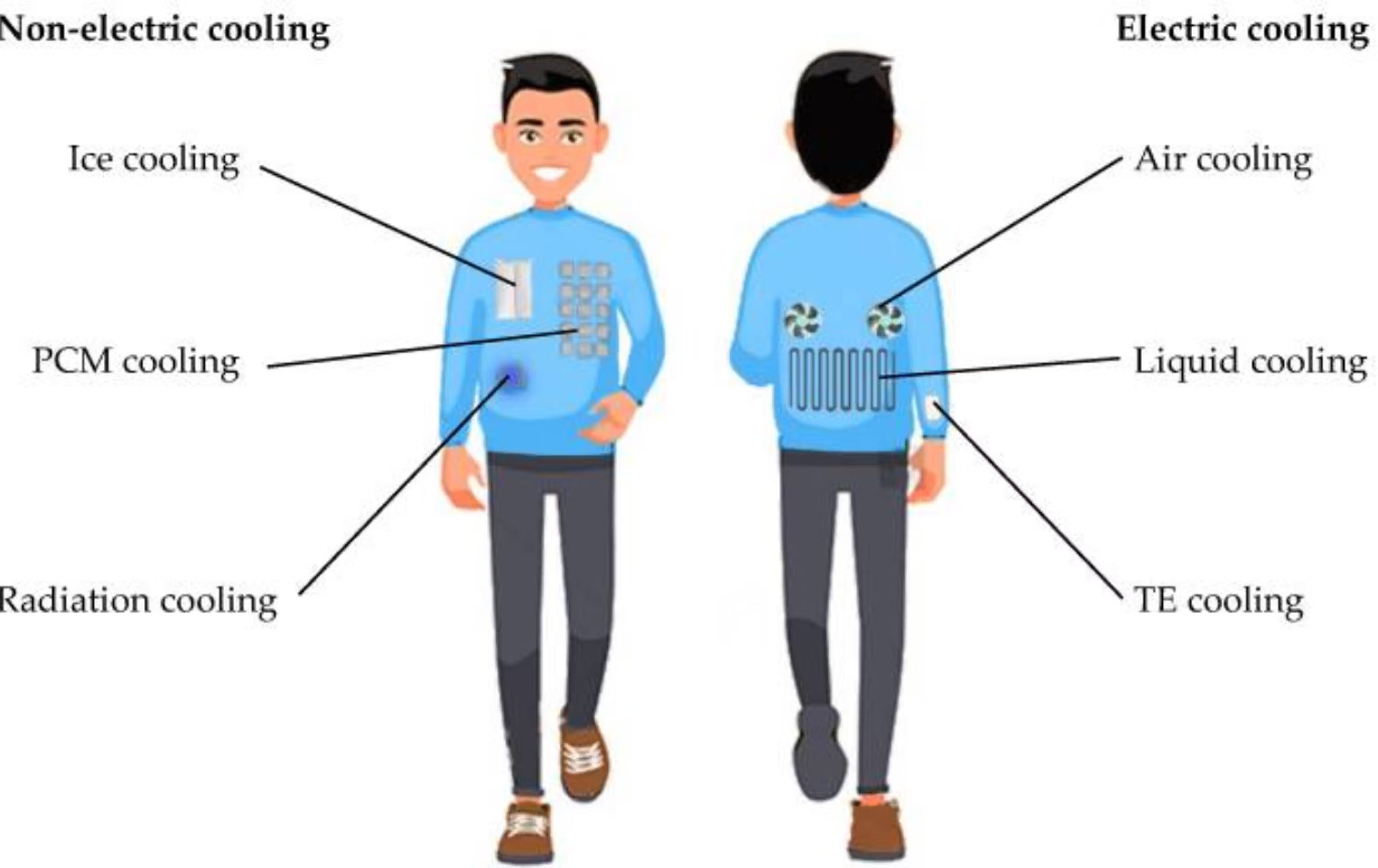
For personal cooling technology to truly make an impact, especially for those who need it most, we believe it must meet several key criteria:
Real Temperature Reduction: The solution must actively lower core body temperature, not just provide comfort. Even a 1°C reduction can significantly decrease the risk of heat-related illnesses.
Affordable for Mass Adoption: The technology must be cost-effective. Low-wage workers and contractors, especially in emerging markets, cannot afford expensive gear, and employers won’t invest in high-cost options. The price point must allow for widespread adoption.
Convenient and Portable: The solution needs to be lightweight, portable, and easy to use. Workers can’t be burdened by heavy or restrictive equipment. This is crucial for vulnerable groups like the elderly and children, who can’t carry heavy gear or rely on constant recharging.
No Dependence on Constant Power: The solution should function without requiring constant access to electricity—no frequent charging or freezing. It must work in all environments, including those without reliable power.
Environmentally Sustainable: The technology must be low-emission. With cooling already responsible for 10% of global greenhouse gas emissions, any new solution must help mitigate, not worsen, the climate crisis.
Are you a founder working on personal cooling technology that meets these criteria? We’d love to hear from you. The market is ready for a breakthrough, and there’s a tremendous opportunity to create a product that can make a real difference in the lives of millions. Reach out if you’re working on the next generation of personal cooling solutions.