

Announcing Valor
By Kristian Branaes, Ari Helgason, and David Pacák

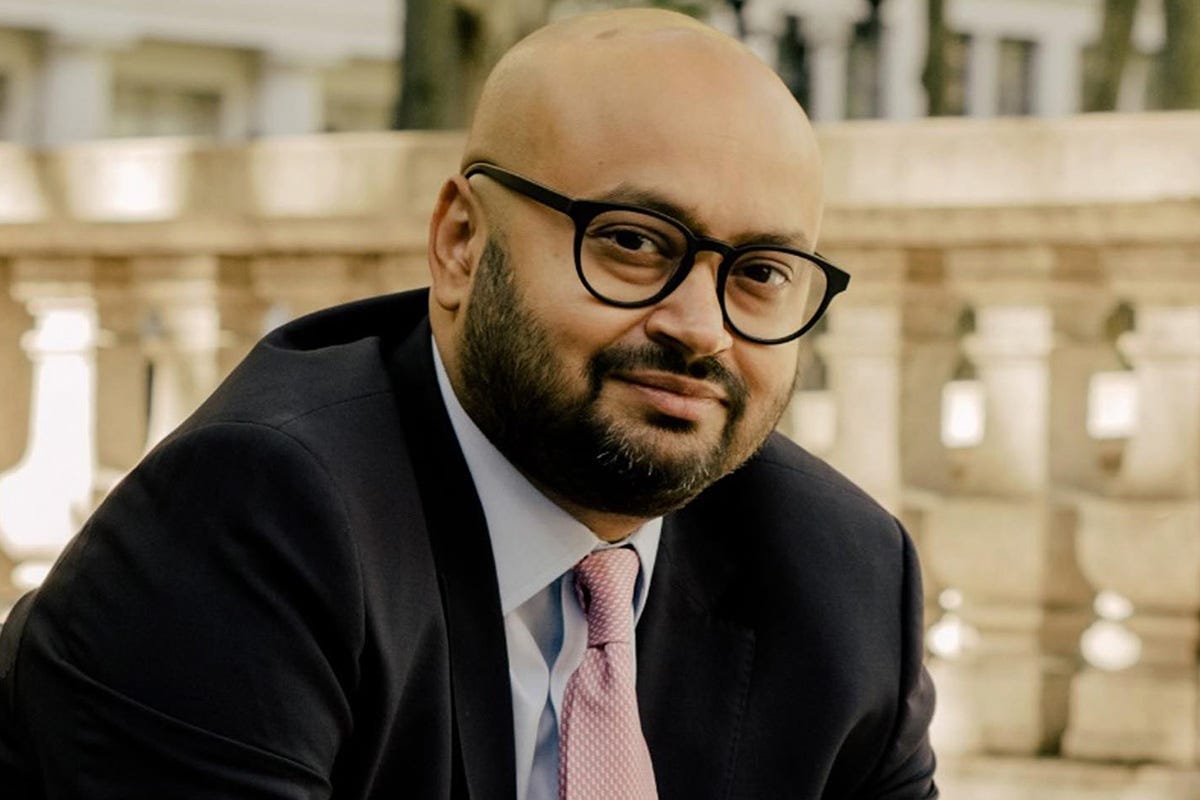
We met Kunal Sinha several years ago when we were looking at the critical minerals market. At the time, he was leading Glencore’s global recycling business and he had spent more than a decade operating at the center of the metals supply chain. We stayed close since, and when he left Glencore last year to start Valor together with Prof. Xiao Su and Dr. Johannes Elbert, two of the leading electrochemists in the United States, we were immediately excited to partner with them.
Why refining
Critical minerals underpin almost every major industrial transformation happening today. They are essential for electrification, AI infrastructure, and advanced manufacturing. But the refining system that produces them is inefficient and geographically concentrated.
Existing refining capacity is heavily centered in China, with more than 50% of copper refining and over 90% of rare earth processing taking place there. For Europe and the United States, this has created a growing strategic vulnerability. Even when minerals are mined locally, they often need to be shipped overseas to be refined before they can enter domestic supply chains.
At the same time, the traditional refining technologies used today are difficult to scale in Western countries. Conventional smelting and chemical leaching plants are energy intensive, environmentally harmful, and extremely expensive to build. As a result, building new refining capacity has become politically and economically difficult in many regions.
Valor’s goal is to fundamentally change how metals are refined. The company is developing an electrochemical refining process that replaces high-temperature smelting and wasteful chemical processes with a clean, electricity-driven system. Using electrochemical liquid-liquid extraction, Valor’s process can selectively recover valuable metals such as gold, palladium, copper and rare earth elements from mixed feedstocks. While traditional refining typically recovers only one or two primary metals and a small number of byproducts, Valor’s approach makes it possible to recover many additional elements from the same feedstock.
The system can achieve ~99% metal purity while reducing carbon emissions by around 90% and lowering water and chemical use by up to 99% compared to conventional refining methods. The plants are designed to recover different metals and process diverse feedstocks, ranging from primary ores to complex waste streams such as e-waste and spent catalysts.
Why now
Demand for critical minerals is rapidly accelerating as electrification, AI infrastructure and advanced manufacturing grow in significance across the global economy. Due to the rising geopolitical uncertainty, governments and industry are increasingly focused on securing resilient supply chains for the materials that underpin these technologies.
In parallel, advances in electrochemistry and separation science are opening the doors to entirely new refining methods. Techniques that were previously confined to academic research are now reaching the level of maturity needed for industrial deployment, creating a rare opportunity to rethink how metals are refined from the ground up.
Looking ahead
Valor’s initial focus is building a pilot facility that demonstrates its electrochemical refining process at an industrially relevant scale. This plant will be developed in collaboration with Solugen, a leading US chemical manufacturing company, and our VP Gaurab (Solugen’s co-founder and CEO) will support the team with the scale up.
The pilot will lay the foundations for a much larger vision. In the long-term, Valor aims to build a new generation of flexible refining facilities that can be deployed across the US and Europe, forming a distributed network of small, medium and large plants that are up to 100× cheaper, faster, smarter and cleaner than incumbent refining infrastructure. We are honoured to be partnering with Kunal, Xiao, Johannes and the Valor team on the journey.