

Announcing Transition Metal Solutions: harnessing the power of biology to tackle the critical metals crisis
By Clara Ricard

When the founder of Transition Metal Solutions and former Zymergen scientist Sasha Milshteyn understood why a certain mine was outperforming, he stumbled upon a unique insight: wild microbial communities already present in the ore could be optimized to boost copper extraction.
This is exactly what mining companies have been desperately looking for. On the one hand, they are dealing with increasing demand (copper demand is expected to grow 2–3× by 2040, driven by electrification across power, grids, and transport). On the other hand, the depletion of high-grade ores is making supply harder and more expensive to extract. More rock must now be processed for the same output - driving up costs, emissions, and capital intensity. Add to this the geopolitical pressure to decouple from China, where around half of the world’s copper smelters are located.
Chemical leaching is a compelling alternative to smelting: it can be deployed on-site, is capex-light, and operates at ambient temperatures. It can process low-grade ores, waste rock, and tailings that smelters cannot. It utilises a fraction of the energy and water required to produce the concentrates shipped to smelters. These are some of the reasons why leaching is expected to take a growing share of copper supply. But today it remains uneconomic for the vast majority of remaining reserves: typical recovery rates of 30-50% mean most leaching operations are unprofitable at scale.
Transition Metal Solutions raises leaching recovery rates by 25-30%, turning low-grade ore chemical leaching into a profitable, scalable, low-emission alternative to smelting. This unlocks a uniquely scalable way to expand copper supply fast enough to meet rising demand while keeping costs and emissions under control.
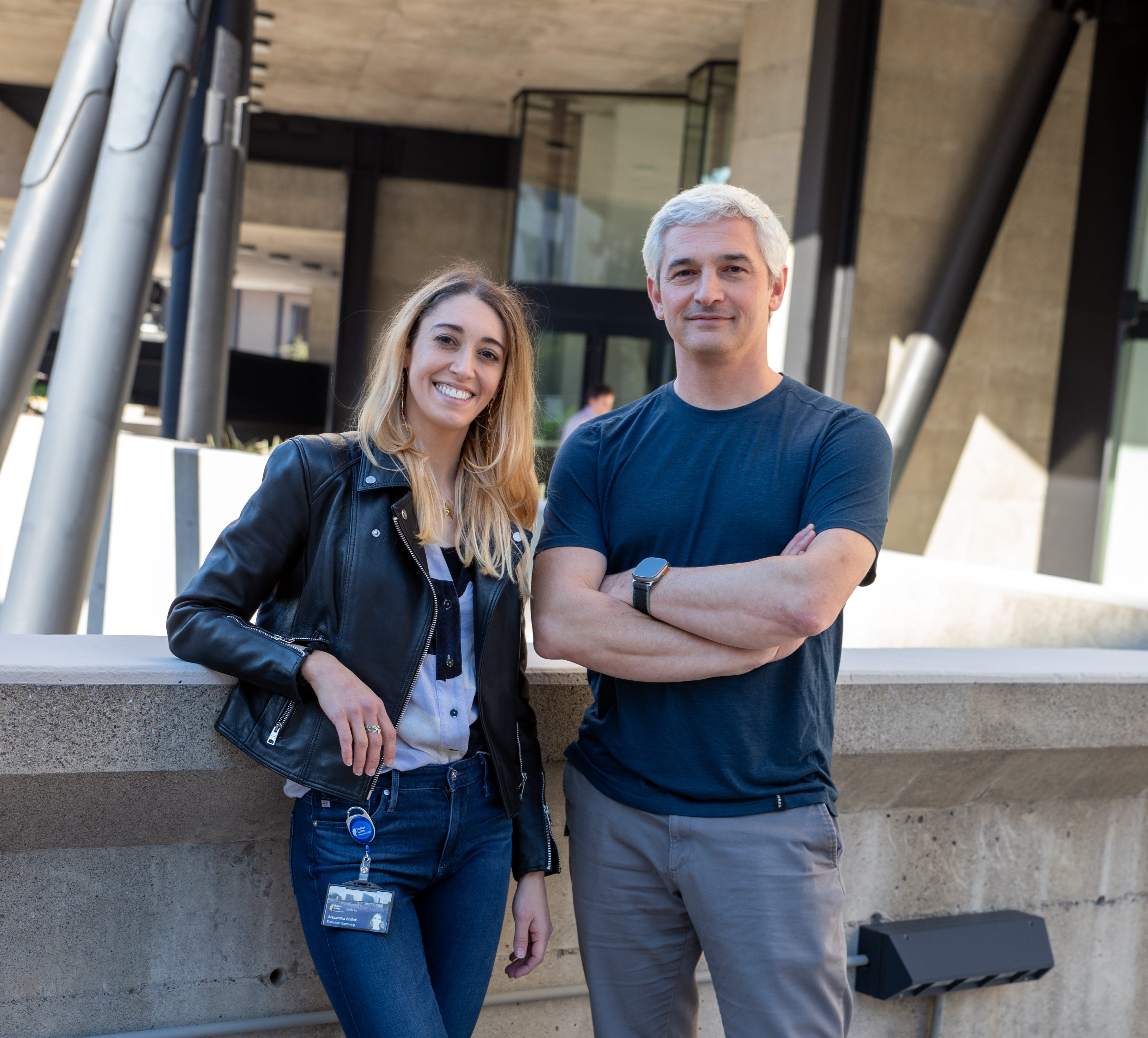
Sasha Milshteyn (Founder & CEO) with Alexandra Shiluk (Co-Founder & COO) at the Bakar BioEnginuity Hub in Berkeley, California
Using microbes for copper extraction is not new - they already play a natural role in breaking the metal out of its mineral form. Several “biomining” companies have raised millions of dollars on a similar promise, but have struggled to translate it into scalable outcomes. These companies typically isolate or engineer individual strains, scale them through large bioreactors, and then apply them to ore heaps.
Transition Metal Solutions takes a completely different approach, which we believe is far more scalable. The company formulates targeted chemical additives that optimize local microbial communities. The solution is drop-in, non-GMO, and capex-light - deployable directly through existing heap irrigation systems.
The team has built a breakthrough, high-throughput lab platform to understand the microbial communities specific to each heap. This is particularly challenging, as we are unfamiliar with more than 90% of the wild microbes present in the ore, and the conditions inside a heap leach are difficult to replicate in a lab.
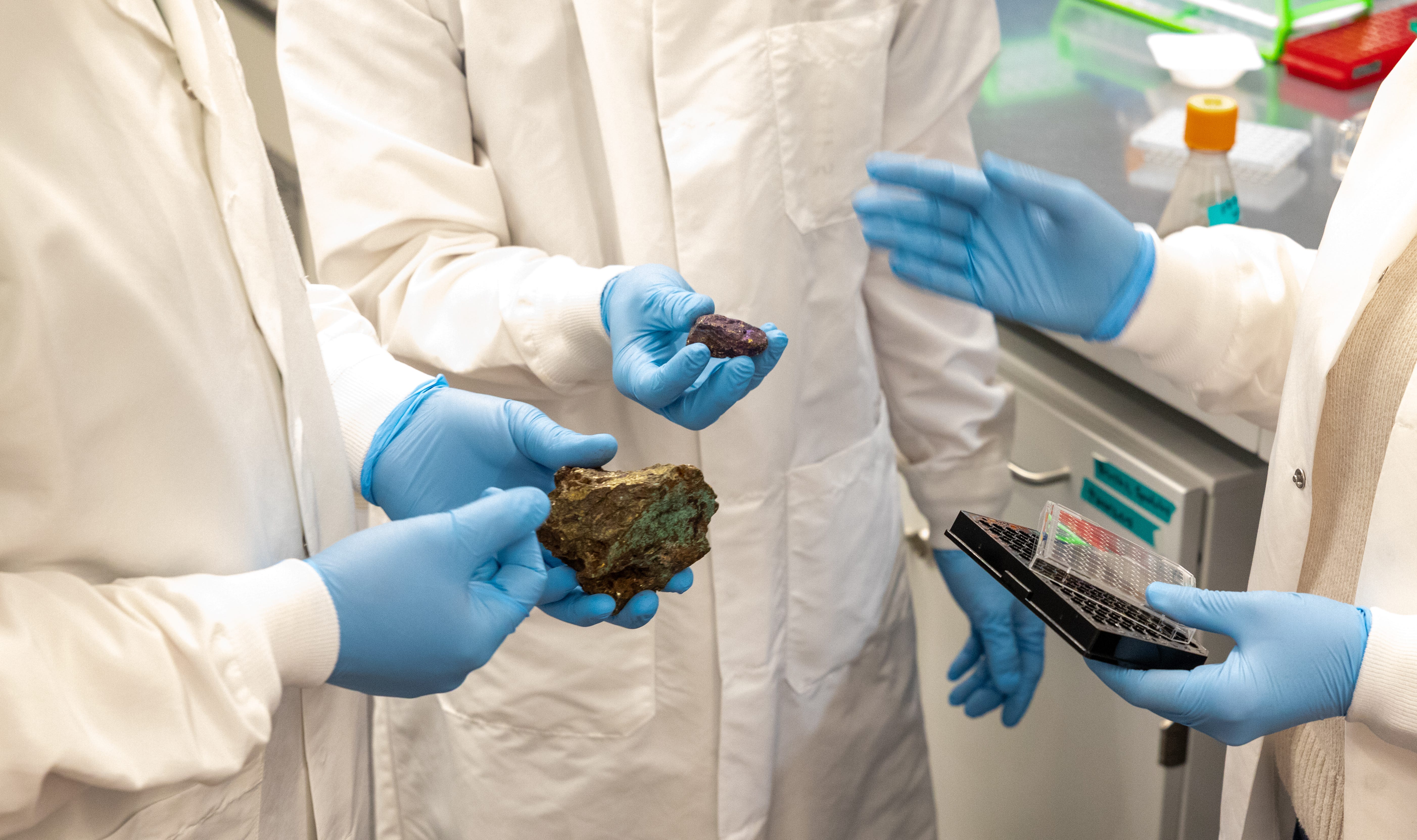
An oxidized copper mineral and chalcopyrite sample
Above all, we are excited to partner with this exceptional team. Sasha is joined by Alexandra Shiluk, an experienced operator as COO, and Vania Grandi, a former Rio Tinto executive with over 25 years of industry experience, as fractional CCO. The broader team includes leading talent in environmental engineering, geochemistry, and computational biology, with additional advisors from Glencore and across the mining industry.
With this round, the company will begin testing customer samples in industrial columns before moving to a demonstration heap containing tens of thousands of tons of material. Transition Metal Solutions is starting with the $247B global copper market and will quickly expand to address other critical metals such as gold, cobalt, nickel, and zinc.