

Announcing Seneca
By Kristian Branaes

We met Stu Landesberg shortly after Grove Collaborative, where he was the founder and CEO, had gone public. Grove had become one of the most important consumer sustainability companies of its generation, but he was already thinking about how to further increase his impact.
In the years that followed, we had the privilege of spending time with Stu as he was thinking about what his next business should be focused on. Throughout this time, our conviction in Stu as a leader grew even further, and we were thrilled when we had the opportunity to partner with him as part of Seneca’s first venture round.
Why Fire
Wildfire is one of the most destructive ways we experience climate change, and one of the hardest problems for climate tech founders to tackle. It destroys lives and ecosystems, releases billions of tons of emissions, and erases the natural carbon sinks we depend on. In addition to immeasurable human and environmental losses, wildfire also causes up to $900 billion of economic damage every year - in the US alone.
Despite this, the market for fire suppression remains deeply fragmented, and dominated by tools and methods that haven’t changed in decades. Helicopters, air tankers, and ground crews remain the standard response, even as fires become faster and more unpredictable every year.
All fires start small, but they can grow exponentially. Even with improvements in early detection, it often takes way too long for traditional solutions to reach and effectively suppress a fire.
Seneca’s goal is to close that gap. The company is building autonomous systems that can locate and suppress fires in minutes rather than hours. They can operate continuously, at night, and in terrain too dangerous or remote for conventional firefighting methods. In addition to being materially more effective than today’s leading solutions, Seneca’s product is also an order of magnitude cheaper.
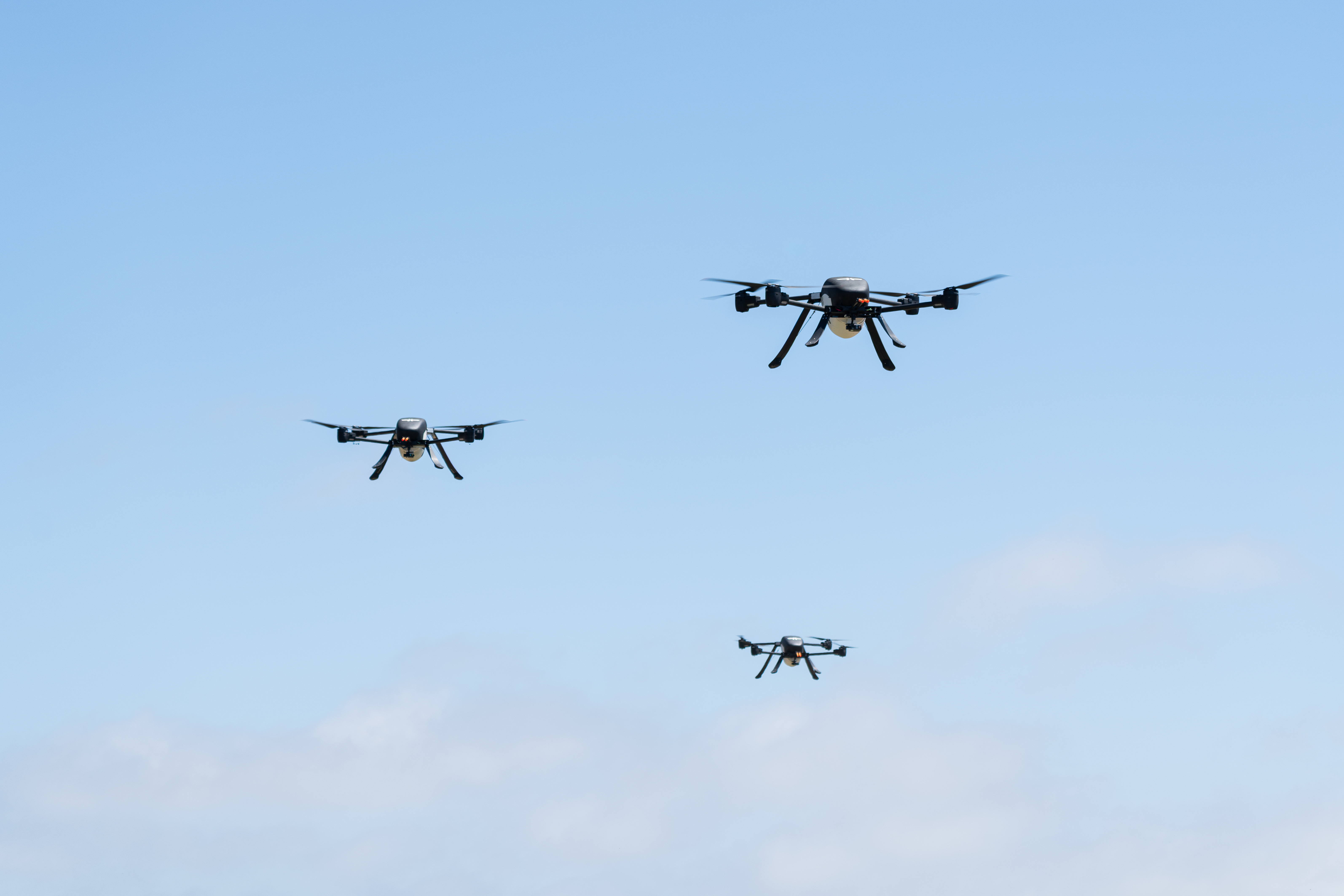
Seneca’s first product is a fire suppression drone. The prototypes have received incredibly positive feedback from both private and public sector customers, and it will be deployed with customers in 2026.
Why Now
Technology has reached a point where meaningful change is possible. Advances in drones, robotics, and AI make rapid, autonomous action in the physical world achievable for the first time.
Public policy is also a meaningful tailwind, as fire-related losses have become too big for politicians to ignore. Across the political spectrum, there is now strong support for increased investment in fire prevention across both the US and Europe.
And perhaps most importantly, the problem itself is accelerating: fire seasons are longer, hotter, and more destructive every year.
These trends are driven by technological, economic and physical factors that will only accelerate in the years ahead.
Looking Ahead
Seneca’s focus today is fire, but the vision is broader. The intelligent and autonomous platform it is developing would be very well placed to protect us against a number of other climate-related risks.
We’re thrilled to be partnering with Stu as he builds an enduring company that aims to protect all of us from an increasingly volatile world.